
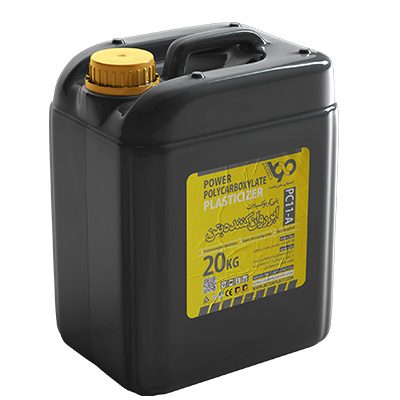
Power Carboxylate Plasticizer Normal
PC11-A
Super Plasticizer Based on Poly Carboxylate Ether
A powerful superplasticizer and severe water reducer
Increases the mechanical strength of concrete
Poly Carboxylate-based superplasticizer is a liquid additive derived from poly Carboxylate ether. It is a very strong water reducer and an enhancer of concrete workability with high performance. This additive can significantly improve the dispersion of cement particles. The use of this product is essential for producing special concretes (self-leveling and self-compacting) and concrete that require minimum water-to-cement ratios or in specific conditions where slump loss cannot be compensated by other superplasticizers. Due to its substantial water-to-cement ratio reduction, this product improves the stability and reduces the permeability of concrete against harmful chemicals, ultimately enhancing the durability and longevity of concrete structures. Additionally, this product enables the production of concrete with water-to-cement ratios ranging from 30% to 40%.
In general, this product is a water-reducing additive used in high-performance cement mixtures. As explained above, this product is based on poly Carboxylate ether and modified with polymeric components, without chloride. Poly Carboxylate superplasticizer can enhance concrete properties, including maintaining slump and increasing compressive strength. It is particularly suitable for temperate and tropical climates, as well as precast concrete factories. Ultimately, by reducing the water-to-cement ratio, water absorption is minimized, durability is improved, and the lifespan of concrete structures is extended.
Mechanism of Action of Poly Carboxylate Superplasticizer
How does the poly Carboxylate superplasticizer work?
The structure of the molecules forming the poly Carboxylate ether-based plasticizer consists of a main branch and several secondary branches. By adding poly Carboxylate ether to the concrete mix or cement mortar, a charged layer is formed, and the poly Carboxylate ether molecules surround the cement particles. This causes repulsion between the cement particles within the concrete or mortar mix. In essence, the spatial steric hindrance of the secondary branches of the poly Carboxylate ether causes particle repulsion, and the hydrophobic force in the main branch of the molecule attracts large molecules, thus keeping water molecules at a greater distance from the cement particles. These properties result in the fluidity of the concrete or mortar mix. After a certain period, the charges in the concrete mix induce reversal, which leads to a slump loss in concrete and the beginning of cement hydration and the setting process of concrete and mortar.
How to Identify a High-Quality Poly Carboxylate Superplasticizer?
Poly Carboxylate superplasticizer is typically produced and offered in a transparent or light honey color. The first option in quality control of this additive is inspecting the product’s color. If the purchased product is dark brown, it likely contains materials other than poly Carboxylate ether, and it will certainly lack the characteristics of a poly Carboxylate superplasticizer. Another important control is the additive’s consistency, which can be tested by touch. High-quality poly Carboxylate superplasticizer with standard performance should have a consistency similar to oil. Furthermore, a good poly Carboxylate superplasticizer should not have any settled particles and must be completely homogeneous.
Properties and Effects of Poly Carboxylate Superplasticizer
What are the properties and effects of poly Carboxylate superplasticizer?
- Increased slump
- Enhanced workability or fluidity of concrete
- Increased durability and longevity of concrete
- Reduced permeability and water absorption
- Creation of aesthetically pleasing (exposed) concrete
- Enhanced cohesiveness and compressive strength of concrete
- Up to 30% reduction in the water-to-cement ratio
- Compatibility with various types of Portland and SRC cements
- Easier handling of large-volume concrete pours
- Significant reduction in concrete bleeding
- Capability to produce concrete with a water-to-cement ratio of 30% to 40%
- Helps release trapped air bubbles in the mix and concrete in its plastic state
Applications of Poly Carboxylate Superplasticizer
What are the main applications of poly Carboxylate superplasticizer?
- Underwater concreting
- Production of high-performance concrete
- Large-volume concrete pours
- Architectural concrete work
- Concrete pouring with tremie pipes
- Suitable for pumpable concrete
- Production of injection mortars
- Capability to produce self-leveling and self-compacting concrete
- Suitable for producing high-strength and durable concrete
- Concrete pours in narrow and heavily reinforced sections
- Ideal for precast concrete production
- Suitable for use in tunnel and slipform molds
Standard Dosage of Poly Carboxylate Superplasticizer
What is the recommended dosage for poly Carboxylate superplasticizer?
The ideal dosage for achieving the desired properties should be determined through various laboratory tests under workshop conditions. This depends on several factors such as ambient temperature, type and size of aggregates, cement content, water-to-cement ratio, and others. However, the typical standard dosage ranges from 0.2% to 0.8% by weight of the cement used.
Price of Poly Carboxylate Superplasticizer
The price of poly Carboxylate superplasticizer depends on the solid content and the quality of the raw material (poly Carboxylate ether) used. It is important to always follow the recommended dosage suggested by the manufacturer when purchasing. A cheaper product may not be of the same quality and may require a higher dosage, which could reduce its economic feasibility.
Method of Application of Poly Carboxylate Superplasticizer
What is the standard method of using poly Carboxylate superplasticizer?
- The calculated amount of superplasticizer should be diluted with twice the volume of mixing water, based on the concrete mix. The diluted additive should then be gradually added to the concrete mix while mixing.
- The additive can be added directly to the prepared concrete mix, and after thorough mixing, the concrete can be poured. It is recommended that each cubic meter of concrete be mixed for at least one minute.
- Poly Carboxylate superplasticizer can be added during the production process to the batching plant or truck mixer.
It should be noted that poly Carboxylate superplasticizer should not be added directly onto dry cement.
Safety of Poly Carboxylate Superplasticizer
What are the safety guidelines for poly Carboxylate superplasticizer?
- This superplasticizer is not classified as toxic, dangerous, or flammable.
- It should not come into contact with eyes. If it does, rinse immediately with plenty of clean water.
- In case of skin irritation, consult a physician.
Physical and Chemical Properties of Poly Carboxylate Superplasticizer
| State | Liquid | | Color | Light Honey Brown | | Specific Gravity | 1.13 g/cm³ | | Standard | ASTM C494, ASTM C1017 | | Chloride Ion | None | | pH | Around 7 |
Storage of Poly Carboxylate Superplasticizer
What are the storage guidelines for poly Carboxylate superplasticizer?
- Shelf Life: One year in original packaging.
- Store away from cold and freezing temperatures, heat, and direct sunlight.
- Optimal storage temperature: +10°C to +30°C.
Packaging of Poly Carboxylate Superplasticizer
- 20-liter drums
- 220-liter barrels
- 1000-liter tanks
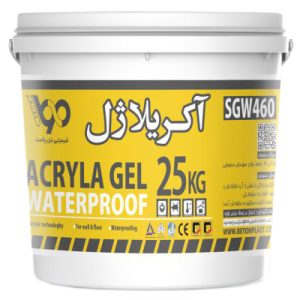
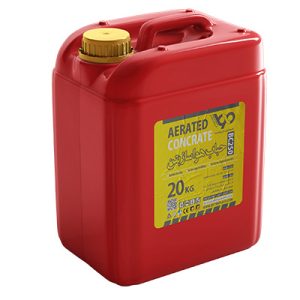
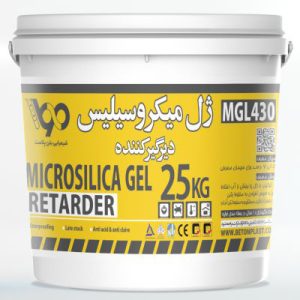
Reviews
There are no reviews yet.