
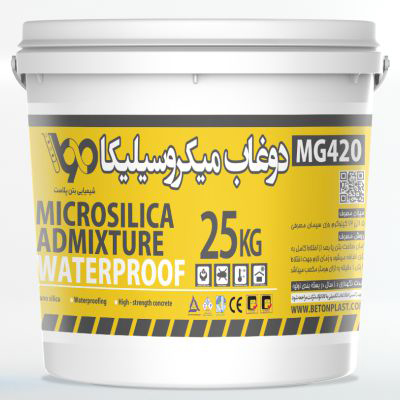
Microsilica Admixture
MG420
Slurry Admixture for Enhanced Concrete Cohesion
- Reduces Concrete Permeability
What is Microsilica Slurry?
Microsilica slurry is a proven product consisting of a suspension of microsilica powder, water, and stabilizing additives. With a density nearly twice that of microsilica powder, it provides better dispersion and usability in concrete applications.
Designed for high-performance, waterproof, and impermeable concrete, microsilica slurry enhances compressive, tensile, and flexural strength. It contains approximately 45-60% silica fume, a higher percentage than typical microsilica gels, making it a superior choice for concrete improvement. This product increases concrete density, reduces permeability, and results in a homogeneous and cohesive mix.
Essentially, this product is a water-based dispersion of microsilica particles. When mixed with water, it forms a slurry that can be transported in liquid-storage tank trailers. It replaces a portion of the water typically added to the concrete mix, enhancing its physical and mechanical properties such as strength and durability.
Mechanism of Action
Microsilica slurry contains highly pozzolanic silica fume, which can partially replace cement due to its similar functionality. When combined with water and calcium hydroxide, it undergoes a reaction forming calcium silicate hydrate (C-S-H), which significantly contributes to concrete hardening and strength development.
This pozzolanic reaction improves:
- Impermeability, preventing moisture ingress
- Mechanical strength, enhancing durability and resistance to abrasion
- Rheological properties, ensuring better workability in fresh concrete
Key Benefits and Effects
- Increases compressive, tensile, and flexural strength
- Enhances alkaline resistance of concrete
- Improves durability in freeze-thaw cycles
- Reduces cement consumption by approximately 20%
- Suitable for exposed concrete surfaces
- Lowers water-to-cement ratio
- Enhances concrete density and impermeability
- Increases abrasion resistance
- Improves pumpability and reduces equipment wear
- Higher density compared to microsilica powder
- Easier and more cost-effective to transport and store than powder
- Prevents bleeding and segregation in fresh concrete
- Can substitute Type II cement with Type V cement
Applications
- High-modulus concrete structures
- Cavitation-resistant concrete structures
- Military and radiation-shielding structures
- Concrete for aggressive and acidic environments
- Freeze-thaw cycle resistant concrete
- Waterproof structures, such as tanks and tunnels
- Colored concrete flooring and pavements
- Durable concrete for coastal and marine environments
- Hospital radiation-resistant concrete
- High-traffic areas like parking decks (abrasion-resistant)
- Thin-section concrete elements
- Mass concrete structures with dense reinforcement
- Water tunnels and low-friction surface canals
Physical & Chemical Properties
| Property | Specification |
| State | Suspension |
| Color | Gray |
| Specific Gravity | 1.30 – 1.35 g/cm³ |
| Chloride Ion Content | Within standard limits |
| pH | ~8 |
Dosage
The recommended dosage of microsilica slurry depends on precise laboratory testing, raw materials, and environmental conditions. However, the standard usage is typically 5-12% of the cement weight.
Usage Instructions
Microsilica slurry can be incorporated into the concrete mix using two methods:
- Direct Addition: After all concrete components are mixed, microsilica slurry is added.
- Pre-mixing: Mix the slurry with part or all of the mixing water before adding dry materials.
Important Notes:
- Reduce mixing water by an amount equivalent to half the microsilica slurry dosage.
- Ensure at least 1 minute of mixing per cubic meter of concrete.
- Due to the high water demand of silica fume, a plasticizer should be used in conjunction with this product.
Safety Guidelines
- Non-toxic & environmentally friendly
- Wear protective gloves, masks, and safety goggles
- In case of skin or eye contact, rinse immediately with clean water
- If ingested, seek medical assistance immediately
Storage Guidelines
- Shelf Life: 12 months in original packaging
- Storage Conditions: Avoid frost, excessive heat, and direct sunlight
- Optimal Temperature: 10°C to 30°C
Packaging
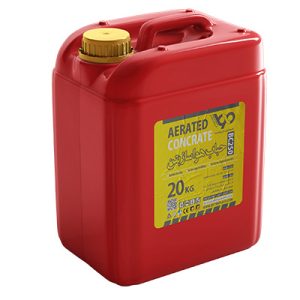
- Available in 25 kg pails
Reviews
There are no reviews yet.