
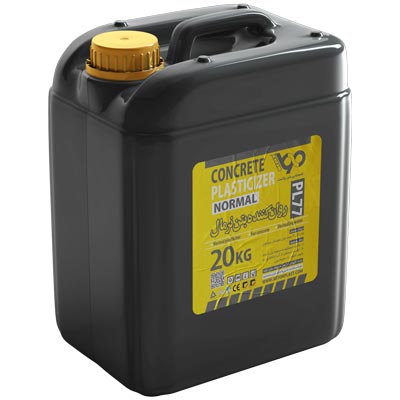
Concrete Plasticizer
PL77 – Normal Plasticizer and Water Reducer
Increase Mechanical Strength of Concrete
Concrete plasticizer is a liquid additive based on lignosulfonate that can be used to increase the workability of concrete and reduce water content. It is a multifunctional product that improves properties such as slump and resistance, leading to stronger and more durable concrete. Additionally, the use of this product reduces the amount of water in the concrete mix by about 10%.
This product is a chemical additive used to increase the fluidity of concrete. It helps reduce the required water amount, improving the strength and durability of concrete without compromising its workability. It is particularly useful during construction, helping achieve better performance in fresh concrete mixes. Concrete plasticizers ultimately improve construction processes.
Mechanism of Action
How does the concrete plasticizer work?
When a lignosulfonate-based plasticizer is added to the mix, the anionic polar group in its molecules connects with a polar hydrocarbon chain containing OH groups. This connection prevents the aggregation of cement particles by creating a dipole effect. As a result, the concrete mix becomes more fluid, and the particles in the mix are dispersed more effectively, improving the overall workability of the concrete.
How to Choose a Quality Concrete Plasticizer?
This type of plasticizer belongs to the first generation of concrete plasticizers. Compared to other plasticizers like carboxylates and naphthalene-based types, it has lower performance and fluidizing power. A high-quality plasticizer should increase the slump of the concrete according to the manufacturer’s recommended dosage without causing any sedimentation. The additive is brown or dark brown in color and has a relatively sticky, oil-like consistency when touched.
Properties and Effects of Concrete Plasticizer
What effects does the concrete plasticizer have on concrete?
- Prevents concrete creep
- Increases durability and longevity of concrete
- Increases slump and workability
- Reduces water content by approximately 10%
- Saves on cement consumption
- Increases compressive and flexural strength
- Prevents surface cracking
- Prevents segregation and bleeding
- Produces smooth and low-porosity concrete surfaces
Major Applications of Concrete Plasticizer
- Suitable for producing pumpable concrete
- Appropriate for post-tensioned and pre-stressed concrete
- Used for all structural element concrete pours
- Effective for concrete made with crushed aggregates
- Enhances bond between poorly graded aggregates
- Suitable for areas with dense reinforcement
- Ideal for normal weather conditions
- Suitable for producing concrete blocks and bricks
- Helps reduce permeability in concrete for swimming pools, tanks, and water treatment plants
Physical and Chemical Properties
- State: Liquid
- Color: Brown
- Specific Gravity: 1.1 gr/cm³
- pH: Around 7
- Standard: ASTM C494 – ISIRI 2930
- Chloride Ion: None
Standard Dosage of Concrete Plasticizer
The exact usage of the concrete plasticizer should be determined based on precise laboratory tests, considering local conditions and the type of materials used. Typically, it is recommended to use between 1.5% to 2% of the weight of the cement in the concrete mix. Using more than the recommended dosage can delay the initial set time of the concrete, but it does not reduce its final strength and can often improve it.
Price of Concrete Plasticizer
The cheapest plasticizer is not always the best choice. Using a lower-quality plasticizer could result in using a larger amount, leading to excess water in the mix and ultimately a weaker concrete product. For the best price, consult with sales experts at the company for a quote based on quality standards.
Method of Use
- Dilute the required amount of plasticizer based on the concrete mix design with 2 times the volume of water. Add this diluted mixture slowly to the concrete during mixing.
- The plasticizer can be added to the batch mixer or truck mixer during concrete production.
- It is important to avoid adding the plasticizer directly onto dry cement.
Safety Guidelines
- Use gloves, a mask, and goggles when handling the plasticizer.
- This product is not hazardous or flammable.
- Avoid eye contact; in case of contact, wash eyes immediately with plenty of clean water.
- If skin irritation occurs, seek medical attention.
Storage Guidelines
- Shelf Life: 1 year in original packaging.
- Storage Conditions: Store away from freezing, excessive heat, and direct sunlight.
- Ideal Temperature Range for Storage: Between +10°C and +30°C.
Packaging Options
- 20-liter cans
- 220-liter barrels
- 1000-liter tanks

Reviews
There are no reviews yet.