
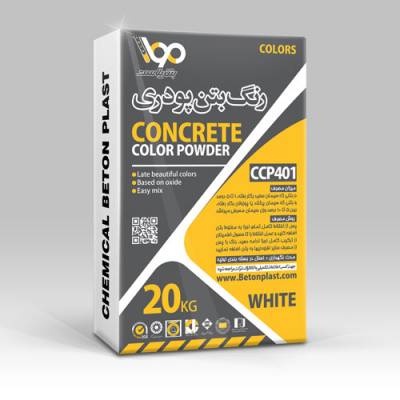
Concrete Color Powder
Pigment for Colored Concrete
CCP350
Powder Additive for Producing Colored Concrete
Based on Iron Oxide and Mineral Materials
Concrete Color Powder Description
Mineral-based powdered colors, such as ochre and red iron oxide pigments, have been used for coloring cement mixtures for many years. This powdered additive, when mixed with concrete materials, is capable of coloring the concrete particles. Although mineral pigments provide satisfactory color results, a higher amount of mineral pigment must be mixed with the concrete to achieve the desired color shade. This, in turn, can reduce the concrete’s strength. However, with advancements in technology for producing construction and industrial pigments, high-power pigments based on iron oxide and titanium oxide have been formulated and produced. These pigments require much less quantity compared to mineral pigments and also offer a wider color range.
The concrete color powder is composed of compounds that can produce a variety of colors and patterns in cement, concrete, and even plaster. Importantly, these materials do not negatively affect the concrete’s quality, and they enhance the appearance and aesthetic of the concrete. Due to the variety of colors available, this product allows for greater innovation and creativity in the concrete industry. This type of pigment is mixed directly into the concrete mix and used to produce permanently colored concrete. The main advantages of using powdered concrete pigments are that the concrete becomes permanently colored, with no risk of peeling or flaking off, and the cost-effectiveness, ease of application, and fast execution compared to liquid concrete pigments. Additionally, it does not require scaffolding or surface preparation for reapplication. This product also offers excellent durability against sunlight exposure.
Overall, this product is a mineral or synthetic pigment available in powder form, which is added to concrete to give it a unique color and appearance. The powder helps to create colored concrete with enhanced beauty, which, in turn, increases the durability and aesthetic appeal of concrete structures.
Mechanism of Concrete Color Powder
Concrete color pigments, or powdered pigments, come in two bases: mineral and organic. They are added to the concrete mix based on the type and amount of cement used, and their effect on the mix design can color the concrete thoroughly. This method of coloring concrete ensures long-lasting results, with no fading of the color over time.
Properties and Effects of Concrete Color Powder
- Reduces the final cost of producing colored concrete.
- Excellent resistance to sunlight exposure.
- Has a long lifespan equal to that of the structure.
- Resists weathering changes and freeze-thaw cycles.
- Compatible with other chemical additives for concrete.
- Stable in various weather conditions and will not fade.
- Non-toxic and environmentally friendly in alkaline environments, preserving the quality and properties of the concrete.
- No adverse effects on the concrete’s properties.
- Excellent abrasion resistance.
Applications of Concrete Color Powder
- Suitable for facades and composite surface applications.
- Ideal for creating colored concrete in public spaces and recreational areas.
- Perfect for concrete block and mosaic production.
- Used for producing colored grout powders for tiles and ceramics.
- Capable of producing colored concrete and mortar.
- Suitable for constructing concrete stadiums.
- Useful for manufacturing precast concrete elements such as curbs, precast walls, concrete planters, etc.
- Ideal for producing colored concrete furniture and seating.
- Suitable for producing artificial stone.
Physical and Chemical Properties Table
- Form: Powder
- Color: Various
- Specific Gravity: 1.1 gr/cm³
- Solubility: In water
- Chloride Ion: None
- pH: 8
Consumption of Concrete Color Powder
The amount of pigment used in different conditions varies depending on the materials and type of cement used.
- In Plaster: 1 to 3% of the weight of the plaster.
- In White Cement: 1 to 3% of the weight of the cement.
- In Gray Cement: 3 to 5% of the weight of the cement.
Note: According to ASTM standards for concrete in the United States, the maximum amount of concrete color powder in the mix design should not exceed 10% of the cement weight. Exceeding this amount can reduce compressive strength and certain properties of the concrete.
Application Method for Concrete Color Powder
After combining all components of the concrete mix, add the color powder to the mixture and continue mixing until a uniform color is achieved. It is essential to add the pigment after any other concrete additives. For every cubic meter of concrete, the mixture should be blended for at least one minute to ensure proper integration.
Safety of Concrete Color Powder
- The powder is not toxic or harmful to the environment.
- Do not ingest or allow contact with eyes. In case of contact, seek medical attention immediately.
- Always wear a mask, gloves, and safety goggles during handling.
- If contact with skin or eyes occurs, rinse immediately with plenty of clean water.
Storage of Concrete Color Powder
- Shelf Life: One year in original packaging.
- Storage Conditions: Keep away from cold, frost, heat, and prolonged direct sunlight.
- Optimal Storage Temperature: 10°C to 30°C.
Packaging of Concrete Color Powder
- 20 kg bag
Reviews
There are no reviews yet.