
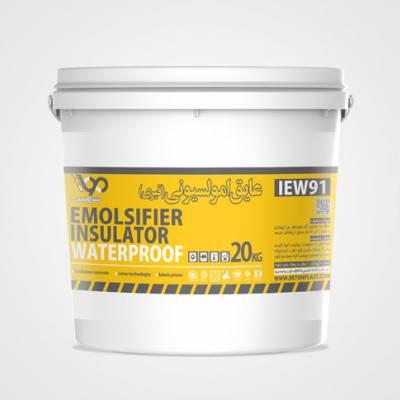
Water-Based Emulsifier Insulator
Bituminous Waterproofing Insulator
IEW91
Bitumen and Acrylic Resin-Based Waterproofing Insulator
Protection of Concrete Against the Penetration of Destructive Ions
The appearance of cracks in concrete structures is a result of the loss of mixing water during the plastic state, which is a common problem for contractors and engineers. When concrete is in a plastic state and loses water or the mixing water is absorbed by surrounding sections, shrinkage and volume reduction occur in the concrete, which ultimately causes surface or deep cracks. Cracks are the best and easiest way for ions and harmful substances to penetrate the concrete, leading to corrosion of the reinforcing steel network. The penetration of ions and harmful environmental factors is more severe in buried or partially buried concrete structures such as foundations, causing irreparable damage to the structure. To prevent the penetration of harmful soil ions into concrete and to prevent the loss of required water, it is necessary to create a proper covering for concrete surfaces that are buried or exposed to dust. The emulsifier bituminous insulator is a suitable option for protecting buried and partially buried concrete from harmful soil ions.
The emulsifier insulator is a viscous liquid in the form of an emulsion based on bitumen and modifying additives, which can be applied pure or diluted with water on surfaces. Once the emulsifier insulator is applied to the concrete surface, the water present in the product evaporates after a certain period, leaving behind a durable and flexible layer that, once dry, is insoluble in water. The emulsifier insulator is ready to use and does not require heat application before use. It also has excellent adhesion to various metallic and concrete surfaces.
In general, this product is a water-based type used for waterproofing surfaces against water and moisture. These insulators are made from compositions that are mixed with water, and after application on the surfaces, they form a waterproof layer once dried.
Properties and Effects of the Emulsifier Waterproofing Insulator
What properties and effects does the emulsifier waterproofing insulator have on the surface?
- No sagging or dripping after application
- Prevents the penetration of salts and harmful ions from the soil on buried and partially buried sections
- Repair of damaged sections of bitumen membranes
- Excellent adhesion to metallic and concrete surfaces
- Single-component, ready-to-use material
- Forms a seamless, uniform layer on concrete and metal surfaces
- No petroleum solvents or flammability
- Not soluble in water after drying
- Can be applied in temperatures ranging from +5°C to +70°C
- Easy and quick to apply on various surfaces
- Creates a flexible waterproofing layer on substrates
- Soluble in water before drying
- Forms a waterproof layer on concrete surfaces
- Stable against salts, chloride ions, and sulfates
Applications of the Emulsifier Waterproofing Insulator
What are the applications of the emulsifier waterproofing insulator?
- Suitable for waterproofing retaining walls in contact with soil
- Applicable on buried and partially buried foundations in soil
- Ideal for use on water transmission channels
- Can replace bitumen membranes with fiberglass mesh inserted between layers
- Waterproofing and sealing of basements
- Suitable for application on tunnel surfaces to protect against chemical damage
- Can be applied on metal surfaces to prevent the penetration of harmful chemicals
- Ideal for protecting all surfaces in contact with soil
Physical and Chemical Properties of the Emulsifier Insulator
| Property | Value |
| State | Viscous liquid |
| Color | Black |
| Specific gravity | 1.46 gr/cm³ |
| Standard | ASTM D1460, ASTM D2939, ASTM D4060 |
| Solubility | In water |
| Surface drying time | 3 hours |
| Final drying time | 3 to 7 days |
| Insoluble particles | None |
Consumption Rate of Emulsifier Waterproofing Insulator
What is the consumption rate of the emulsifier waterproofing insulator?
The amount of emulsifier used depends on the type and roughness of the surface. Typically, between 1 to 1.5 kg per square meter is used.
Application Method of the Emulsifier Waterproofing Insulator
How is the emulsifier waterproofing insulator applied?
The substrate surface must be free of dust, contaminants, grease, etc., before applying the emulsifier insulator. If the surface is contaminated, clean it thoroughly using water jet (water blasting) or sandblasting. Mix one part emulsifier insulator with one part water using a mechanical mixer (drill + paddle) and apply it as a primer to the surface to enhance adhesion. The primer should be dry enough that it does not stick to your hand. Once the primer is dry, apply a pure layer of emulsifier insulator using a brush or roller. The second layer should be applied about 2 to 3 hours after the first layer when it is still tacky. For increased quality and reinforcement of the insulator, it is recommended to place a layer of fiberglass mesh between the two layers of the emulsifier insulator. Apply the second layer over the mesh before it dries.
Safety of the Emulsifier Waterproofing Insulator
What are the safety considerations for using the emulsifier waterproofing insulator?
- This product is not hazardous to the environment.
- In case of contact with skin or eyes, rinse immediately with plenty of clean water.
- Always use a mask, gloves, and safety goggles when working with chemical products.
- Should not be ingested or come into direct contact with eyes.
Storage of the Emulsifier Waterproofing Insulator
How should the emulsifier waterproofing insulator be stored?
- Shelf life: One year in original packaging
- Store away from freezing temperatures, extreme heat, and direct sunlight
- Ideal storage temperature: +10°C to +30°C
Packaging of the Emulsifier Waterproofing Insulator
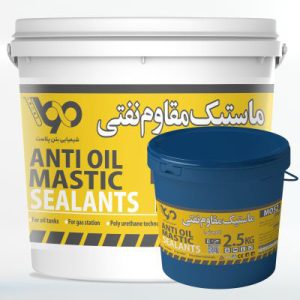
- 20 kg Bucket
Reviews
There are no reviews yet.