
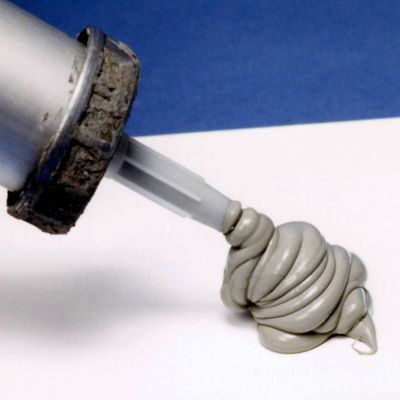
Polyurethane Joint Sealant
MP50
Powerful Sealant Paste for Various Structural Joints
Extraordinary Adhesion Strength
What is Polyurethane Joint Sealant?
Polyurethane Joint Sealant is used to prevent damages caused by the expansion and contraction of buildings due to temperature changes in the environment or to prevent the transfer of loads from an old building to a newly constructed one. It is also used in large buildings composed of several blocks joined together. Expansion joints should be placed in appropriate locations based on factors such as the number of floors, materials used, and the climate of the construction site. In large floors, such as industrial hall floors or road pavings, it is not possible to pour concrete in one stage, so appropriate construction joints must be designed and made. Filling these joints after construction cannot be done with regular mortars and requires a material that has strong adhesion and high elasticity to resist structural stresses after the joint is filled. Polyurethane Joint Sealant is a powerful product designed for filling construction and expansion joints. This single-component product is based on polyurethane resins and, upon absorbing moisture from the air, transforms into a solid, elastic, and flexible form. It is used for balancing and controlling the movement of different types of joints. Polyurethane Joint Sealant is a ready-to-use product that can be easily applied to the desired joints. It is widely used for repairing and maintaining structural cracks and joints. Additionally, this product is simple to use and does not require special expertise.
This product is an elastomeric joint sealant, made from polyurethane, designed for sealing and bonding various surfaces. It has high flexibility and is resistant to impact and vibrations.
Mechanism of Action of Polyurethane Joint Sealant
How does Polyurethane Joint Sealant work?
Polyurethane Joint Sealant is a highly powerful adhesive based on polyurethane resins. After application, it effectively fills the joint and permanently bonds it. The sealant does not harden completely after curing but instead remains flexible, like rubber, and offers excellent resistance to structural stresses without detaching.
Properties and Effects of Polyurethane Joint Sealant
What properties and effects does Polyurethane Joint Sealant have?
- Excellent resistance to acids and petroleum hydrocarbons, with no shrinkage or contraction.
- Extraordinary adhesion to various materials.
- Easy application without the need for special expertise.
- High elongation, maintaining flexibility even under extreme heat and freezing temperatures, without contraction.
- Resistance to UV radiation from sunlight.
- Suitable for use in a wide temperature range.
- Good abrasion resistance.
- High durability against water and moisture.
- Good resistance to corrosive substances.
- Resistant to permanent deformation.
Applications of Polyurethane Joint Sealant
What are the applications of Polyurethane Joint Sealant?
- Sealing joints in potable water tanks.
- Suitable for expansion joints and seams.
- Sealing pipes and precast components.
- Waterproofing joints in dams and power plants.
- Suitable for sealing joints in tunnels and water transfer lines.
- Ideal for repairing and maintaining structural cracks.
- Sealing surfaces exposed to corrosive chemicals.
- Suitable for sealing sections near acidic substances and petroleum hydrocarbons.
- Compatible for sealing inlet and outlet pipes and decorative lighting in swimming pools.
- Suitable for horizontal sealing of tile and ceramic joints.
- Ideal for sealing expansion joints in industrial floors.
Physical and Chemical Properties of Polyurethane Joint Sealant
What are the physical and chemical properties of Polyurethane Joint Sealant?
| Feature | Specification |
| Physical State | Paste |
| Color | White, Black, Gray |
| Surface Drying Time | 30 minutes |
| Drying Time (24 hrs) | 2-3 mm |
| Elongation at Break | 600% |
| Recovery to Original Shape | 85% |
| Joint Movement Capability | 25% |
Polyurethane Joint Sealant Standards
Which international standards does Polyurethane Joint Sealant meet?
- ASTM C793
- ASTM C920
- ASTM C510
- ASTM C794
Consumption of Polyurethane Joint Sealant
How much Polyurethane Joint Sealant is needed?
The consumption amount depends on the size of the joint and the volume required for application, considering the specific weight.
Application Method for Polyurethane Joint Sealant
How is Polyurethane Joint Sealant applied?
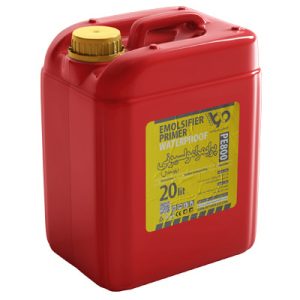
All joints to be sealed with Polyurethane Joint Sealant should be free from any loose particles, dust, paint, grease, water, moisture, or contaminants. If moisture is present, it should be dried using heat or other methods, as applying the sealant in damp conditions may cause bubbles. Any dirt, dust, or loose areas should be cleaned using a water jet or grinding. Porous surfaces must be smoothed using sanding, sandblasting, or other methods. The minimum concrete age for applying the sealant is 28 days. It is recommended to apply a primer on the substrate to enhance adhesion. Apply the primer at least 3 hours and no more than 6 hours before the sealant application. If more than 6 hours have passed since the primer was applied, reapply the primer. For application, the width and depth of the joint should be equal, so the joint where the sealant is applied becomes square. The application of Polyurethane Joint Sealant is done with a special caulking gun. To smooth and finish the surface, use a trowel or spatula coated with a cleaning agent. Polyurethane Joint Sealant can be applied using manual or pneumatic caulking guns with a maximum pressure of 3.5 kg.
Safety of Polyurethane Joint Sealant
What safety precautions should be followed when using Polyurethane Joint Sealant?
- In case of accidental contact with skin or eyes, wash immediately.
- If swallowed, seek medical attention immediately.
- When applying the sealant, always wear gloves and a suitable mask.
- Polyurethane Joint Sealant is not classified as a hazardous substance for the environment.
Storage of Polyurethane Joint Sealant
How should Polyurethane Joint Sealant be stored?
- Duration: 1 year in the original packaging.
- Conditions: Keep away from cold, freezing, heat, and prolonged direct sunlight.
- Best storage temperature: 10°C to 30°C.
Packaging of Polyurethane Joint Sealant
How is Polyurethane Joint Sealant packaged?
- 600 ml Tube
Reviews
There are no reviews yet.