
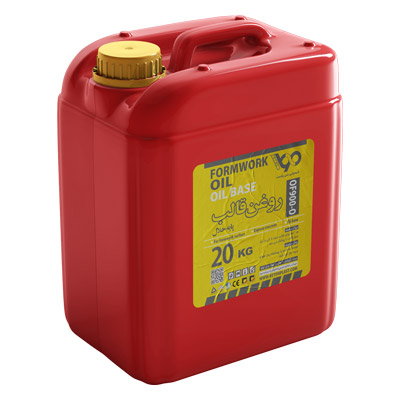
Solvent-Based Formwork Oil
Formwork Oil
Oil Base OF900-O
Formwork Release Agent for Metal Molds
Improving Concrete Surface Quality
Solvent-based formwork oil is a specially formulated oil that creates an ultra-thin film on the surfaces of metal, concrete, or wooden molds, making it easier to separate the formwork from the concrete. One of the advantages of using solvent-based formwork oil is that it prevents the formation of surface bubbles. In traditional methods, used oil was applied to lubricate the molds, but this method is now nearly obsolete. The oil provides better movement of air bubbles around the formwork, ensuring that they escape quickly once the mold is removed, preventing discoloration of the concrete surface, and not interfering with the adhesion of paint, repair, or waterproofing materials.
The concrete pouring process, from selecting and mixing materials to curing and maintaining the concrete, must be carried out according to standards with proper preparation to achieve optimal results. A critical part of this preparation is formwork, typically made of metal, wood, or plastic. Before pouring the concrete, the mold should be prepared so that the concrete can easily separate from it and ensure that the quality of the concrete surface is not compromised by the mold’s roughness, leading to issues like concrete peeling or porosity. Therefore, it is necessary to lubricate the mold surfaces with a special agent before pouring concrete to ensure easy separation and maintain the concrete’s surface quality. The solvent-based formwork oil has been formulated and introduced to the market for this purpose. It does not dissolve in water.
In essence, this solvent-based formwork oil is a ready-to-use, oil-based formwork release agent that facilitates the easy separation of concrete from molds. It is free from water solubility and is a standard product designed to prevent mold rusting while making the separation of concrete from molds easier.
This product acts as a lubricant, helping to easily remove concrete or other molded materials from the formwork. It contains organic solvents that form a thin, uniform layer on the surface of the mold, preventing the concrete or other materials from sticking to the formwork. This results in improved surface quality of the final product and extends the lifespan of the molds. Due to its high performance and ease of use, it is widely used in the construction industry and in the production of precast concrete parts.
Mechanism of Action of Solvent-Based Formwork Oil
When the solvent-based formwork oil is applied, it forms a lubricating layer on the mold surface before concrete pouring. The primary benefit of using this oil is the easier removal of concrete from the mold, which is why it’s also called a mold release agent. In addition to helping the concrete easily separate from the mold, the oil forms a layer that prevents air bubbles from adhering to the mold surface, creating a smoother and more uniform surface for the concrete. As a result, when the mold is removed, the concrete does not stick to the mold, preventing surface imperfections, voids, and the need for rework.
Properties and Effects of Solvent-Based Formwork Oil
- No need for hammering to separate the mold from the concrete.
- Facilitates the movement of air bubbles around the mold surface.
- Allows for easy cleaning and removal of contaminants from tools and molds using water.
- Does not cause discoloration of concrete surfaces.
- More cost-effective compared to traditional methods.
- Provides adequate and effective coverage on mold surfaces.
- Increases the lifespan and durability of metal, plastic, and wooden molds.
- No need for cleaning or scraping concrete off the mold surface after demolding.
- Does not create contamination or negative effects on the concrete or mold.
- Does not interfere with the adhesion of paint, sealants, or repair mortars to the concrete surface.
- Results in smoother and more uniform concrete surfaces compared to untreated mold surfaces.
- Can be easily applied using a brush or roller on various types of concrete molds.
Applications of Formwork Oil
- Suitable for all types of metal molds.
- Ideal for use on wooden and plastic molds.
- Particularly suitable for rubber molds used in the production of artificial stone.
- Perfect for lubricating molds for concrete elements that will undergo waterproofing, sealing, or repair treatments after mold removal.
- Suitable for producing exposed concrete surfaces.
Physical and Chemical Properties of Formwork Oil (Solvent-Based)
- State: Liquid
- Color: Brown
- Specific Gravity: 0.85 gr/cm³
- Insoluble Particles: Present
- Application Method: Using a spray gun or brush
- Solubility: Soluble in petroleum solvents
Which International Standards is Solvent-Based Formwork Oil Tested Against?
CE204, CE1407
Consumption Rate of Solvent-Based Formwork Oil
The consumption rate of formwork oil depends on the mold material and the surface’s porosity and roughness. Under normal conditions, adding 0.5 to 1 liter of petroleum solvent to 1 liter of formwork oil covers approximately 10 to 12 square meters of surface area.
How to Use Solvent-Based Formwork Oil
It is recommended to shake the container of the product several times before use or, if possible, mix it using a mechanical stirrer. Each unit of formwork oil can be combined with 50 to 100 percent of petroleum products such as diesel fuel. The mold surface should be free from dust, concrete, and cement before applying the formwork oil. If there is concrete or mortar on the mold surface, clean the surface using a pressure washer (water jet) or sandblasting. Apply the formwork oil using a roller, brush, or spray. The oil can also be applied in its pure form.
Safety of Solvent-Based Formwork Oil
This product is non-toxic and safe for the environment.
Use a mask, gloves, and safety goggles during application.
This product is flammable.
It should not be ingested or come into contact with eyes.
In case of skin or eye contact, rinse with plenty of warm water.
Storage of Solvent-Based Formwork Oil
- Shelf Life: 1 year in its original packaging.
- Conditions: Keep away from freezing, excessive heat, and direct sunlight.
- Optimal Storage Temperature: Between 10 and 30°C
Packaging of Solvent-Based Formwork Oil
- 20-liter canister
- 220-liter drum
- 1000-liter tank

Reviews
There are no reviews yet.