
Plastic Fiber Concrete
FiberPlast50
FIBERPL50
Reinforcement Alternative to Rebar for Concrete
Increases Concrete Hardness and Mechanical Strength
What is Plastic Fiber Concrete?
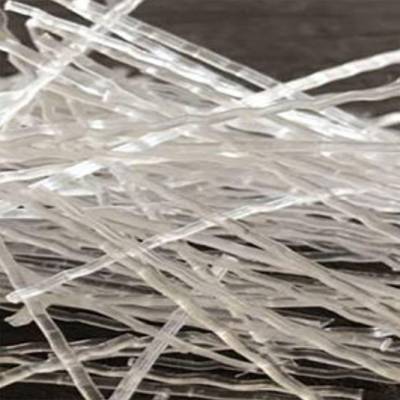
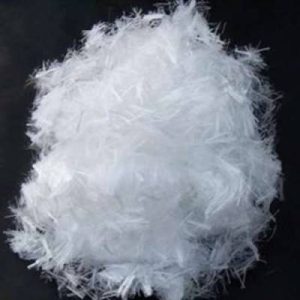
Plastic fiber concrete is a modern product in the field of fibers used in concrete pouring, and it is highly economical. This concrete fiber has special characteristics and is a suitable alternative to rebar in certain concrete structures. Plastic fibers in concrete are produced from a natural polymeric structure with uniform polypropylene bonds and are modeled and manufactured with a sinusoidal appearance for better bonding in the cement matrix and high anchorage in the concrete.
Plastic fibers are commonly used in concrete flooring and serve as a suitable alternative to rebar in flooring applications. These plastic fibers reduce shrinkage in fresh and hardened concrete and increase resistance to impact and fatigue. They also improve the durability and long-term properties of concrete, enhancing its structural parameters and controlling secondary or thermal cracks. Furthermore, the use of plastic fibers increases the concrete’s resistance to impact and enhances its tensile stability.
In general, plastic fiber concrete is highly durable, moisture-resistant, and adaptable, making it ideal for various applications.
Mechanism of Action of Plastic Fiber Concrete
How does plastic fiber concrete work?
The effect of plastic fibers on concrete is largely dependent on the interaction between the cement mortar and the fibers. This reaction increases physical, chemical, and frictional bonding, as well as mechanical restraint due to fiber deformation or its geometric shape change.
In fact, the fibers inside the concrete matrix act as a reinforcement and prevent separation and cracking, bridging between potential cracks.
Properties and Effects of Plastic Fiber Concrete
What properties and effects does plastic fiber provide to concrete?
- Ease of execution
- More economical than reinforced concrete with rebar
- Increases tensile, shear, and bending resistance of concrete
- Prevents thermal cracking in concrete
- Enhances concrete’s durability against fatigue
- Increases resistance to seismic loads and live loads
- Increases resistance to thermal stresses caused by concrete shrinkage
- Does not cause corrosion due to the material (plastic)
- Bridges between cracks and joints
- Increases the dynamic strength of concrete
- Increases resistance to impact
- Increases tensile stability
- Enhances durability against thermal shock and explosion resistance, with long-term bending energy absorption and stability
Applications of Plastic Fiber Concrete
Where is plastic fiber concrete used?
- Compatible for mixing in repair mortars
- Suitable for industrial and non-industrial flooring
- Produces concrete with high abrasion and impact resistance
- Ideal for shotcrete applications
- Suitable for use in tunnel walls and mining excavations
- Can be used in both concrete and steel bridge decks
- Suitable for steel deck roof concrete pouring
- Ideal for producing prefabricated concrete parts and walls
- Suitable for road and airport paving
- Can be used in flooring for military storage and power plants
- Ideal for concrete structures in military and nuclear applications
Physical and Chemical Properties of Plastic Fiber Concrete
Material: Plastic
Color: White – Gray
Specific Weight: 0.9 g/cm³
Material: Plastic
Equivalent Diameter: 0.9 mm
Tensile Strength: 500 MPa
Water Absorption: Zero
Melting Point: 172°C
Consumption of Plastic Fiber Concrete
How much plastic fiber concrete should be used?
The typical and average consumption of plastic fibers in concrete varies depending on the structure, with a range of 2 to 4 kg per cubic meter, based on the desired performance.
Application Method for Plastic Fiber Concrete
How should plastic fiber concrete be used?
Plastic fibers can be added to the concrete mix or shotcrete in several ways:
- Adding plastic fibers at the concrete manufacturing plant
- Adding plastic fibers at the project site (manual concrete mixing)
- Adding fibers to the truck mixer at the project site
Ensure that for each cubic meter of concrete, at least one minute of mixing is performed to fully incorporate the fibers and achieve a homogeneous distribution throughout the mix.
Safety of Plastic Fiber Concrete
Plastic fiber concrete is not toxic or hazardous, but due to the slow biodegradability of plastic in nature, it can pose environmental problems if disposed of improperly.
- If swallowed, seek medical attention immediately.
- Wear appropriate gloves while handling the fibers.
- These plastic fibers are not flammable.
Storage Conditions for Plastic Fiber Concrete
Duration: 2 years in the original packaging
Conditions: Keep away from direct sunlight and moisture
Storage Temperature: Between +10°C and +30°C
Packaging of Plastic Fiber Concrete
Packaging: 20 kg bags
Reviews
There are no reviews yet.