
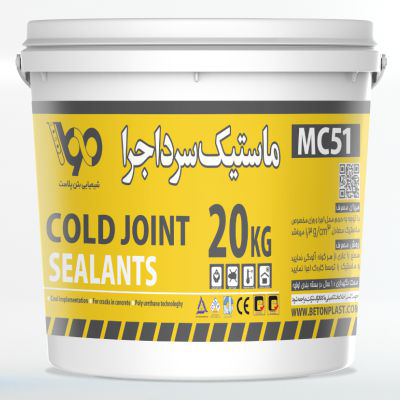
Cold Joint Sealant
MC51
Waterproof Sealant for Concrete Surfaces
Ready to Use in Cold Application
What is Cold Joint Sealant?
Cold Joint Sealant; filling the expansion joints in concrete structures is one of the most critical stages in construction. The filler material for these joints must be compatible with the structural behavior of the building, ensuring water tightness and maintaining its properties over time, with long-term durability and no environmental or health concerns. One such cost-effective and simple option is the Cold Joint Sealant.
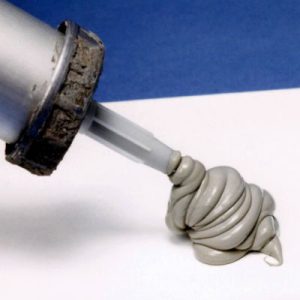
Cold Joint Sealant is a single-component, ready-to-use material made from a combination of rubberized bitumen, special solvents, asphalt, and chemical additives, reinforced with emulsion resins. It has high adhesive properties to a variety of surfaces, such as concrete, brick, asphalt, etc. After solvent evaporation, the sealant transforms into a solid, flexible material. The non-asbestos fibers present prevent dripping and leakage during application, enabling its use on vertical joints. This sealant is ideal for expansion joints. It is suitable for use in standard structures but not in those exposed to chemical solvents or petroleum products. Economically, it is much more cost-effective than other expansion joint fillers. Additionally, it’s easier to apply than its counterpart (hot-applied bituminous sealant), requiring no heat application for fluidity. This product also exhibits excellent resistance to varying weather conditions.
Mechanism of Cold Joint Sealant
The Cold Joint Sealant is made from bitumen, emulsion resins, and specific mineral powders, which give it strong adhesive properties. Once applied and dried, it forms a hard yet flexible layer that provides water sealing and adhesion properties of bitumen and emulsion resins. The formulation includes special compounds that make the product soft and moldable during application, making it easy to pour or inject into the desired areas.
Properties and Effects of Cold Joint Sealant
- Excellent adhesion to various materials such as wood, concrete, metal, etc.
- Stability against chlorides and other destructive ions, with no leakage during application.
- High resistance to various weather conditions.
- Can be applied in temperatures ranging from -5°C to 70°C.
- Easy to apply, single-component and ready to use.
- Adequate resistance to seawater and water pressure.
Applications of Cold Joint Sealant
- Ideal for water sealing and filling expansion joints.
- Used for sealing concrete pipes and water transfer channels.
- Suitable for filling expansion joints in bridges and buildings.
- Effective in sealing channels for water transmission and water pipes.
- Can be used on asphalt cracks and various surfaces.
- Can be applied both horizontally and vertically.
Physical and Chemical Properties
- State: Elastic Paste
- Color: Black
- Specific Gravity: 1.3 gr/cm³
- Application Temperature: 10°C to 40°C
- Chloride Ion: None
- Initial Curing: 4 hours
- Final Curing: 4 weeks
Standards for Cold Joint Sealant
Complies with the following standards:
- C1193 – ASTM C1330
Consumption Rate
The exact amount to use is determined based on the volume of the area to be treated and considering the specific gravity (1.3 gr/cm³).
Application Method
Before applying Cold Joint Sealant, ensure that the surface is clean and free of contaminants such as oils, dirt, and grease. If there are any contaminants, clean them using water pressure (water jet) or sandblasting. The surface must be smooth and free of weak points. If necessary, repair and prepare the base. This sealant can be applied on moist surfaces, but not excessively wet ones. If applied to hot or very dry, rough surfaces, a primer layer (50% diluted product) is recommended. To make the product easier to use, place the sealed container in a bath of water at approximately 70°C to soften the contents.
For application, use a spatula, spoon, or inject it into the joints. It’s suggested to apply the sealant in two layers, with the second layer applied once the first layer has sufficiently set. For better mechanical bonding, sand the surface after the first layer has dried but before it completely hardens (around 3 to 4 hours after application).
Safety Guidelines
- Immediately clean tools after use.
- Wear safety goggles, gloves, and appropriate work clothing during application.
- This product is not toxic to the environment.
- It should never be ingested or come into contact with the eyes.
- If ingested, seek medical attention immediately.
- The product is not flammable.
Storage Guidelines
- Shelf Life: 1 year in its original packaging.
- Storage Conditions: Keep away from freezing, heat, and prolonged exposure to direct sunlight.
- Ideal Storage Temperature: 10°C to 30°C
Packaging
- Available in 20 kg buckets.


Reviews
There are no reviews yet.