
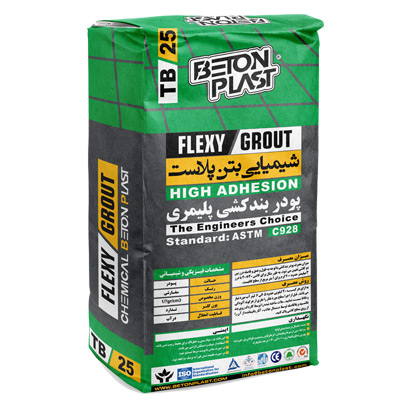
Polymer Grout Powder – Tile Grout
TB25-W
Ready-Mix Grout for Tile and Ceramic
Based on Cement and Copolymer Resins
Description of Polymer Grout Powder
Polymer Grout Powder is essential for grouting tiles and ceramics, a crucial step in the tiling process. Proper grouting not only fills the gaps between tiles and ceramics but also provides waterproofing and enhances the aesthetic appearance of the tiling. Traditional grouting methods, such as slurry filling, have become outdated, and various grouting products are now available on the market. One of the easiest methods for grouting tiles and ceramics is using cement-based polymer grout powder. This grout product is made from cement, organic chemicals, mineral powders, and acrylic resins, which create a strong, uniform bond between tiles. Besides its use for grouting, this product also enhances bonding strength and moisture resistance. The use of pre-mixed grouting compounds, depending on the conditions and characteristics of the worksite, helps improve quality, durability, and strength, while also speeding up the application process. The grout powder can be further colored by adding organic and mineral pigments. This product is suitable for use on both horizontal and vertical surfaces.
In tiling applications, which also include tile adhesives, this product ensures secure and durable bonding of tiles to surfaces such as walls and floors. It can also increase the texture, performance, and overall strength of the adhesive, preventing sagging before the adhesive sets. This polymer grout powder is one of the key additives that enhances the properties of tile adhesives.
Mechanism of Polymer Grout Powder
The grout powder is formulated with cement, micronized fillers, and acrylic resin powders, which, due to their soft grain size and powdered adhesive content, create a uniform, cohesive grout mixture when combined with water. This waterproof grout flows easily into the gaps between tiles and ceramics, filling the spaces while providing elasticity and flexibility to withstand minor vibrations and structural movements.
Properties and Effects of Polymer Grout Powder
- Excellent adhesion to tile and ceramic surfaces
- High bonding strength to tile edges and underlying surfaces
- Waterproof and moisture-resistant
- Highly resistant to freeze-thaw cycles
- Suitable for both horizontal and vertical surfaces
- Good resistance to acids and cleaning agents
- Can be pigmented for colored grout mixtures
- Does not sag or run during application
- Easy to apply without the need for special skills
- No shrinkage or contraction during curing
Applications of Polymer Grout Powder
- Suitable for grouting various types of tiles, mosaics, ceramics, and stones
- Ideal for grouting gaps up to 15 mm deep
- Suitable for grouting artificial stones
- Suitable for grouting around bathtubs and toilets
- Effective for sealing gaps in concrete and cement components
- Can be used in consistently wet environments, such as swimming pools, bathrooms, and saunas
- Can fill all types of gaps and joints
Physical and Chemical Properties
- Form: Powder
- Color: Customizable
- Specific Gravity: 1.7 gr/cm³
- Standard: C928
- Chloride Ion: None
Consumption of Polymer Grout Powder
The consumption rate of the grout powder depends on the gap between the installed tiles and the size of the tiles and ceramics. Generally, for small tiles (15×15 cm) with 3 mm gaps, approximately 250 grams of grout powder is sufficient for 1 square meter of surface area. For 40×40 cm tiles with the same gap, the consumption rate is around 150-200 grams per square meter.
Instructions for Use
For grouting freshly installed tiles: Mix one 20 kg bag of polymer grout powder with approximately 5 to 6 liters of water. Spread it over the surface and immediately wipe the surface of the tiles with an absorbent cloth to ensure the grout fills the gaps, then remove the excess from the tile surface.
For repairing old grout joints: First, remove the old grout using a scraper or sharp object. Clean the loose, dirty, or greasy areas using water pressure or a brush. Then, apply the newly prepared grout mixture.
Note: The water-to-powder ratio should be adjusted depending on whether the tiles are horizontal or vertical. For horizontal surfaces, more water is needed to create a slurry-like grout mixture, while for vertical surfaces, the water ratio should be reduced to create a firmer paste for grouting.
Safety of Polymer Grout Powder
- Polymer grout powder is not classified as toxic or hazardous to the environment.
- Always wear gloves and a mask when mixing and using the powder.
- Avoid inhaling dust from the powder directly.
- Prevent direct contact with skin and eyes.
Storage of Polymer Grout Powder
- The product has a shelf life of six months in its original packaging.
- Store the product in a cool, dry place, away from freezing temperatures, heat, and prolonged exposure to direct sunlight.
- The optimal storage temperature is between 10°C and 30°C.
Packaging
- 5 kg Bag
Reviews
There are no reviews yet.