
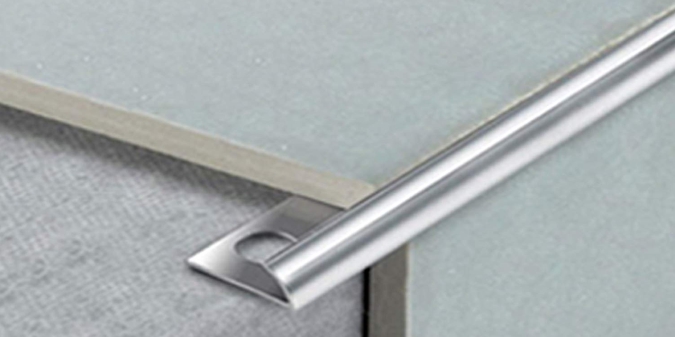
Tile and Ceramic Corner Strip
The tile and ceramic corner strip, also known as tile trim, corner strip, and similar names, is used primarily at the beginning and end of tiling or stone laying processes to enhance the aesthetic of the work. Typically, at the positive corners where two edges of tiles or ceramics meet, the visual result is not very appealing, and there is a need to cover these corners properly. Additionally, when tiling, the tiles placed at the corners and edges of walls often have sharp edges due to the cutting process. These sharp edges not only pose a safety risk but also do not glaze properly. Furthermore, covering these edges with grout can be problematic. To address these issues, the tile corner strip, or trim, has been developed.
The tile corner strip provides a way to cover the edges of tiles and ceramics without needing to bevel the edges. This strip can be used not only for tiles and ceramics but also for stone and wood. Tile corner strips are typically made from two materials: stainless steel and PVC, and are available in a variety of colors. The color and design are chosen based on the tile’s surface pattern, ensuring that the corners and edges are aesthetically pleasing. Additionally, the tile corner strip can serve as a “sheen strip,” offering stability and making it an excellent choice for use as a vertical leveling guide for tile installers.
Another application of the tile corner strip is its use as a guide during installation. The corner trim remains firm and stable during tiling, allowing tile installers to use it as a vertical leveling strip.
Tile corner strips are made from either chrome-plated stainless steel or PVC, both of which are highly durable and resistant to various weather conditions, ensuring they are corrosion-resistant.
Features
- Customizable in various sizes upon request.
- Resistant to rust, fading, and breakage.
- Long-lasting durability.
Reviews
There are no reviews yet.