
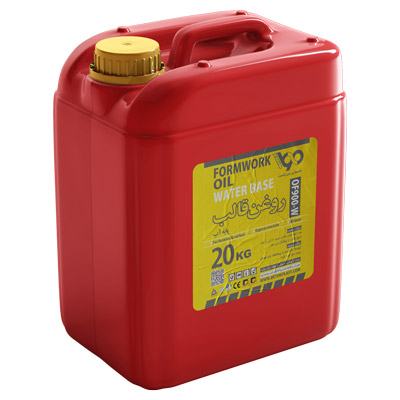
Water-Based Mold Release Oil
OF900-W
Mold Release Agent for Metal Forms
Water-based formwork oil, an emulsion-based oil, forms a very thin film on the surface of metal, concrete, or wooden molds, which helps in the easy release of concrete from the mold. Another advantage of using water-based mold release oil is the prevention of surface air bubbles. In old methods, used oil was commonly applied to lubricate mold surfaces, a method that is now almost obsolete. The water-based mold release oil provides advantages over used oil, such as ease of movement of air bubbles near the mold, which quickly dissipate after mold removal, and also prevents discoloration of the concrete surface, ensuring that paint or repair and waterproofing materials do not adhere to the concrete surface.
For proper concrete pouring, the selection and mixing of materials, as well as the curing and maintenance stages, should follow standard regulations. One of the essential steps in this process is formwork, usually done using metal, wooden, or plastic molds. The mold surface must be of such quality that concrete easily releases from the mold without affecting the concrete surface with damage or porosity. Therefore, it is essential to lubricate the mold surface before pouring concrete with a specialized agent so that the concrete can easily be released from the mold, and the concrete surface quality remains intact. This is why the mold release oil product was formulated and produced.
Generally, this water-based product is a chemical oil that, as mentioned earlier, is water-soluble and can help in the easy separation of the mold from the concrete. It is recommended to apply the product just before concrete pouring to achieve the best possible quality of the concrete. Additionally, using this product shortens the formwork time and is highly cost-effective.
This product is a lubricant used to make it easier to separate molds from concrete or other molded materials. Unlike organic solvents, it uses water as a carrier. Due to its environmental and safety features, water-based oils are becoming more popular compared to solvent-based oils.
Mechanism of Action of Water-Based Mold Release Oil
Water-based mold release oil creates a thin layer of grease on the surface of the molds before concrete pouring, offering several advantages. One of the most important benefits is the easier release of concrete from the mold surface, which is why this product is also known as mold release oil. In addition to facilitating mold separation, it creates a smooth and pore-free surface by forming a greasy layer between the mold and the concrete. One of the key features of this oil is that when the mold is removed, the concrete does not stick to the mold, avoiding surface damage to the concrete, eliminating the need for repairs, and ensuring that no concrete is left behind on the mold after demolding.
Properties and Effects of Water-Based Mold Release Oil
- No need to hammer the mold to separate it from the concrete.
- Improves the movement of air bubbles near the mold.
- Easily washable, allowing for cleaning of tools and molds using water.
- Prevents discoloration of the concrete surface.
- Cost-effective compared to similar methods.
- Provides proper coverage and is ideal for mold surfaces.
- Increases the lifespan and durability of concrete molds.
- No need for cleaning or removing concrete from the mold.
- Does not cause pollution or negative effects on the concrete surface.
- Does not affect the adhesion of paint, repair mortars, or waterproofing materials to the concrete surface.
- Non-toxic and non-flammable.
- Produces concrete with a smoother surface than mold forming without using mold release oil.
Applications of Water-Based Mold Release Oil
- Suitable for use on metal mold surfaces.
- Can be used on wooden and plastic molds.
- Ideal for use on rubber molds for the production of artificial stone.
- Suitable for lubricating molds of concrete sections where waterproofing or repair work will be done after mold removal.
- Perfect for producing exposed surface concrete.
Physical and Chemical Properties of Water-Based Mold Release Oil
- State: Liquid
- Color: Brown
- Specific Gravity: 0.85 gr/cm3
- Standard: CE 204 – CE 1407
- Chlorine Ion: None
- pH: Around 7
- Solubility: Water-soluble
Consumption Rate of Water-Based Mold Release Oil
The amount of oil required depends on the mold material and the surface’s porosity and roughness. Normally, when 0.5 to 1 liter of water is added to each liter of mold release oil, it can cover 10 to 12 square meters of surface.
Application Method of Water-Based Mold Release Oil
It is recommended to shake the container of the product several times before use or mix it with a mechanical mixer, if possible. One unit of mold release oil can be mixed with 50 to 100 percent of water before use. The mold surface should be clean of dust, concrete, and cement before applying the oil. In case of concrete or mortar spots, use water pressure (water jet) or sandblasting to remove contamination. Apply the mold release oil using a roller, brush, or spray. The product can also be used undiluted.
Safety of Water-Based Mold Release Oil
This product is non-toxic and environmentally safe.
- Wear a mask, gloves, and safety goggles during use.
- Do not ingest or contact with eyes.
- In case of skin or eye contact, wash with plenty of lukewarm water.
Storage of Water-Based Mold Release Oil
- Shelf Life: Six months in the original packaging.
- Storage Conditions: Store away from freezing, excessive heat, and direct prolonged sunlight.
- Ideal Storage Temperature: 10+ to 30+ degrees Celsius.
Packaging of Water-Based Mold Release Oil
- 20 kg Gallon
Reviews
There are no reviews yet.